
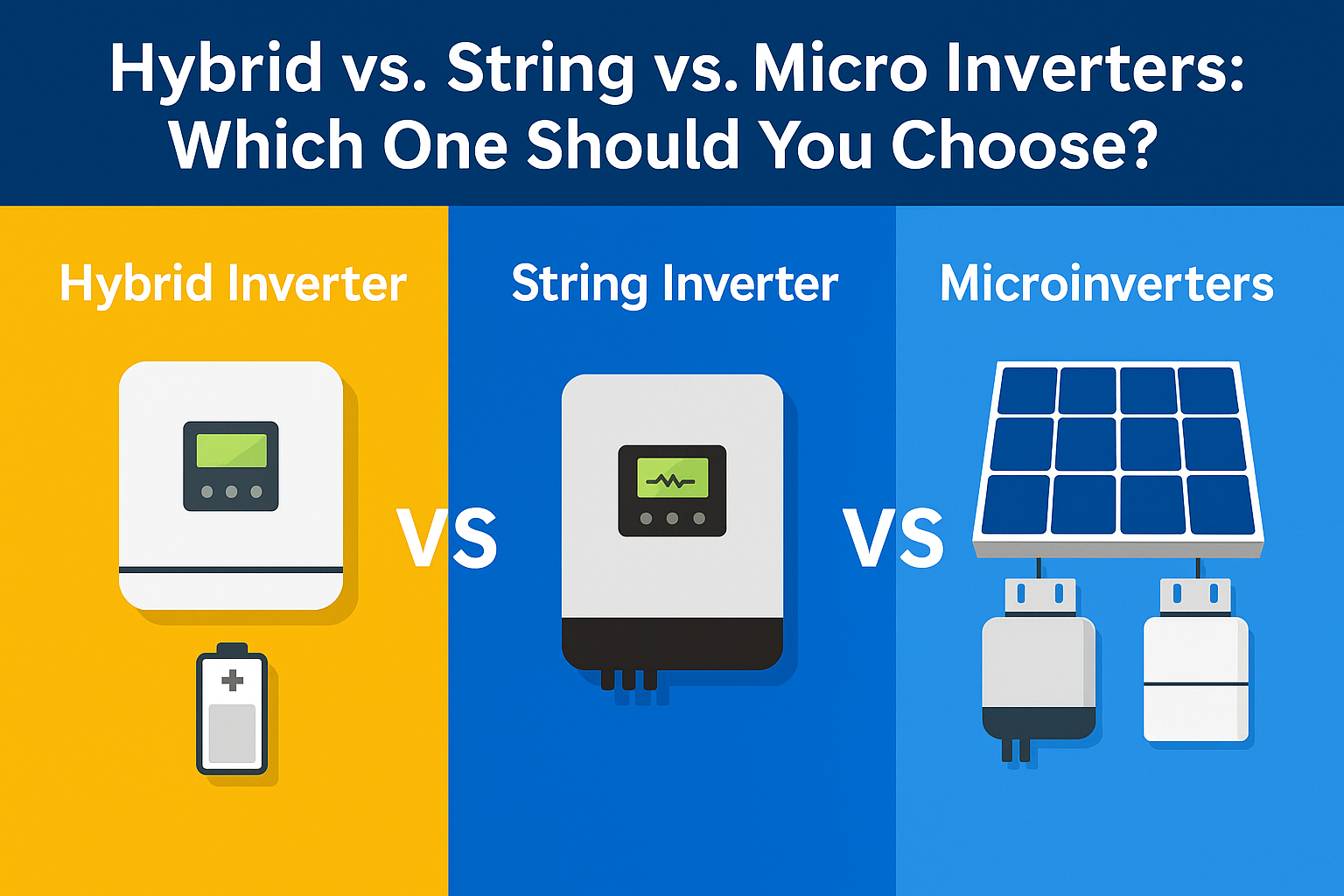
Why Your Inverter Choice Matters
Choosing the right inverter is one of the most important decisions you’ll make when installing solar. Even if you buy the most efficient panels on the market, your system’s performance still depends heavily on the inverter you choose. After all, the inverter is the “brain” of your solar setup — converting sunlight into usable household power and managing system safety and performance.
Because there are several inverter types on the market, it’s essential to understand how each one works. In Australia, the three most common options are string inverters, micro inverters, and hybrid inverters. Each has strengths, limitations, and ideal use cases.
Let’s break them down so you can choose the one that suits your home, budget, and long-term energy goals.
What Is a String Inverter?
A string inverter is the traditional and most widely used inverter type in Australia. It connects a group of solar panels (a “string”) into one central inverter, which converts the DC power into AC electricity for your home.
Pros
- Affordable: Usually the cheapest inverter option.
- Reliable: String inverters have been used for decades and are proven to perform well.
- Easy to maintain: With only one main unit, servicing is straightforward.
Cons
- Shading issues: If one panel is shaded, the whole string loses efficiency.
- Limited individual panel monitoring: You see performance for the whole system, not per panel.
Best For
Homeowners with unshaded roofs, simple layouts, and a budget-friendly approach.
What Are Micro Inverters?
Micro inverters are small devices mounted behind each solar panel, converting DC to AC at panel level. This design allows every panel to operate independently.
Pros
- Great for shading: One shaded panel doesn’t affect the rest.
- Panel-level optimisation: Ideal for complex roof shapes or multiple orientations.
- Better safety profile: Lower DC voltage across the roof.
Cons
- Higher upfront cost: They cost more per watt than string inverters.
- More components: More devices increase the chance of isolated faults.
Best For
Homes with partial shading, multiple roof directions, or homeowners who want maximum energy harvest and monitoring accuracy.
What Is a Hybrid Inverter?
A hybrid inverter manages both your solar panels and a battery. It converts power for your home while also storing excess energy in a battery — making it ideal for anyone planning to add storage now or later.
Pros
- Battery-ready: No need for costly upgrades later.
- Optimised energy management: Smart control over when to charge/discharge.
- Great for future-proofing: Works well with VPPs and energy programs.
Cons
- Higher cost than standard string inverters
- Complexity depends on the model: Not all hybrid inverters offer advanced monitoring.
Best For
Homeowners who want a battery now or in the near future, or who want to reduce grid reliance as energy prices rise.
How They Compare: At a Glance
| Feature | String Inverter | Micro Inverter | Hybrid Inverter |
|---|---|---|---|
| Cost | Low | High | Medium–High |
| Shading Performance | Low | Excellent | Medium |
| Battery Ready | No | No | Yes |
| Monitoring | System-level | Panel-level | Detailed |
| Maintenance | Easy | Harder (on roof) | Easy |
| Best Fit | Simple roofs | Shaded/complex roofs | Homes adding batteries |
Australian Energy Trends: Why This Choice Matters Even More in 2026
Solar installation trends are rapidly shifting. According to the Australian Renewable Energy Agency (ARENA), new energy technology is creating smarter, safer, and more flexible solar systems.
https://arena.gov.au/
This includes improved battery integration, advanced inverter tech, and stronger grid support features. Because of this, choosing the right inverter today will determine whether your system is compatible with future energy programs, Virtual Power Plants (VPPs), and dynamic tariffs.
So, Which One Should YOU Choose?
Here’s the quick decision guide:
Choose a String Inverter if:
Your roof is unshaded
You want the most cost-effective solution
You prefer simple maintenance
Choose Micro Inverters if:
You have shade throughout the day
Your roof has multiple directions
You value panel-level monitoring and safety
Choose a Hybrid Inverter if:
You plan to add a battery now or later
You want better energy management
You want future-proof technology
Ready to Compare Real Quotes?
Choosing the right inverter becomes easier when you talk to experienced, accredited installers. They can assess your roof, usage patterns, shading, and budget — then recommend the best system design.
For fast, transparent, no-obligation quotes from trusted Australian installers, use:
Request Solar Quotes (Free)
https://quotes.solarproof.com.au/request-solar-quotes/
It takes less than two minutes and can save you thousands by avoiding the wrong setup.