
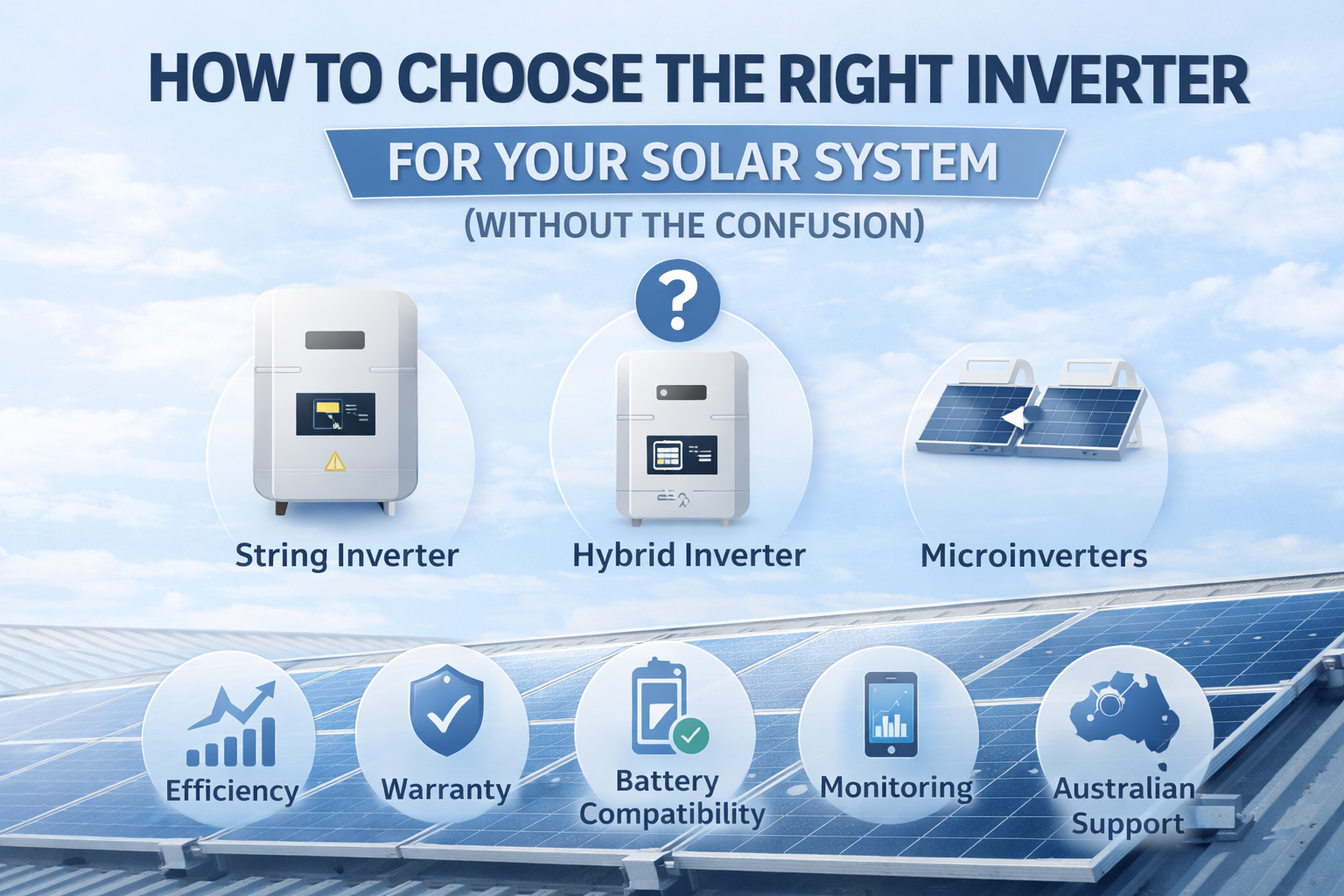
Solar panels generate electricity, but the inverter is what makes that energy usable in your home.
It converts DC power from your panels into AC electricity for everyday use.
Choosing the wrong inverter can lead to:
- Lower energy output
- Compatibility issues
- Limited upgrade options
- Reduced system lifespan
Research and testing from organisations like CSIRO highlight the importance of system design and component quality in achieving long-term solar performance.
If you’re comparing solar systems, start here:
👉 https://quotes.solarproof.com.au/request-solar-quotes/
The 3 Main Types of Solar Inverters
Understanding inverter types is the first step.
1. String Inverters
The most common option for residential systems.
Best for:
- Simple roof layouts
- Low shading
- Budget-friendly installations
Pros:
- Lower cost
- Reliable technology
- Easy maintenance
Cons:
- Performance affected by shading on one panel
2. Hybrid Inverters
Hybrid inverters work with both solar panels and batteries.
Best for:
- Future battery upgrades
- Energy storage systems
Pros:
- Battery-ready
- Flexible system design
- Smart energy management
Cons:
- Slightly higher upfront cost
If you’re considering battery upgrades, learn more here:
👉 https://quotes.solarproof.com.au/upgrade-solar-battery-2026/
3. Microinverters
Installed on each individual solar panel.
Best for:
- Complex roofs
- Shaded areas
Pros:
- Panel-level optimisation
- Higher performance in partial shading
- Enhanced monitoring
Cons:
- Higher cost
Key Factors to Consider When Choosing an Inverter
1. Efficiency
Higher efficiency means more solar energy is converted into usable electricity.
Look for inverters with 95%+ efficiency ratings.
2. Warranty
Typical inverter warranties range from:
- 5–10 years (standard)
- 10–15 years (premium models)
Longer warranties often indicate better reliability.
3. Battery Compatibility
Even if you don’t plan to install a battery now, choosing a hybrid inverter can future-proof your system.
4. Monitoring Features
Modern inverters include apps that allow you to:
- Track energy production
- Monitor system performance
- Detect issues early
5. Local Support
Choose brands with strong Australian support networks.
This ensures faster service if repairs or replacements are needed.
Matching the Inverter to Your Home
The best inverter depends on your specific situation.
Choose a String Inverter if:
- Your roof has minimal shading
- You want a cost-effective system
Choose a Hybrid Inverter if:
- You plan to add a battery
- You want energy independence
Choose Microinverters if:
- Your roof has multiple angles
- You experience shading
Common Mistakes to Avoid
Avoid these common errors when choosing an inverter:
- Choosing based on price alone
- Ignoring warranty details
- Not planning for future upgrades
- Selecting unknown brands without support
A cheap inverter can cost more in the long run if it fails early.
Why Professional Advice Matters
Solar system design is not one-size-fits-all.
A qualified installer can:
- Assess your roof layout
- Recommend suitable inverter types
- Ensure system compatibility
- Optimise long-term performance
Final Thoughts
Choosing the right inverter doesn’t have to be complicated.
By understanding your options and focusing on key factors like efficiency, warranty and compatibility, you can select a system that delivers strong performance for years.
The right inverter ensures your solar system operates efficiently, reliably and is ready for future upgrades.
👉 Compare solar system options here:
https://quotes.solarproof.com.au/request-solar-quotes/