
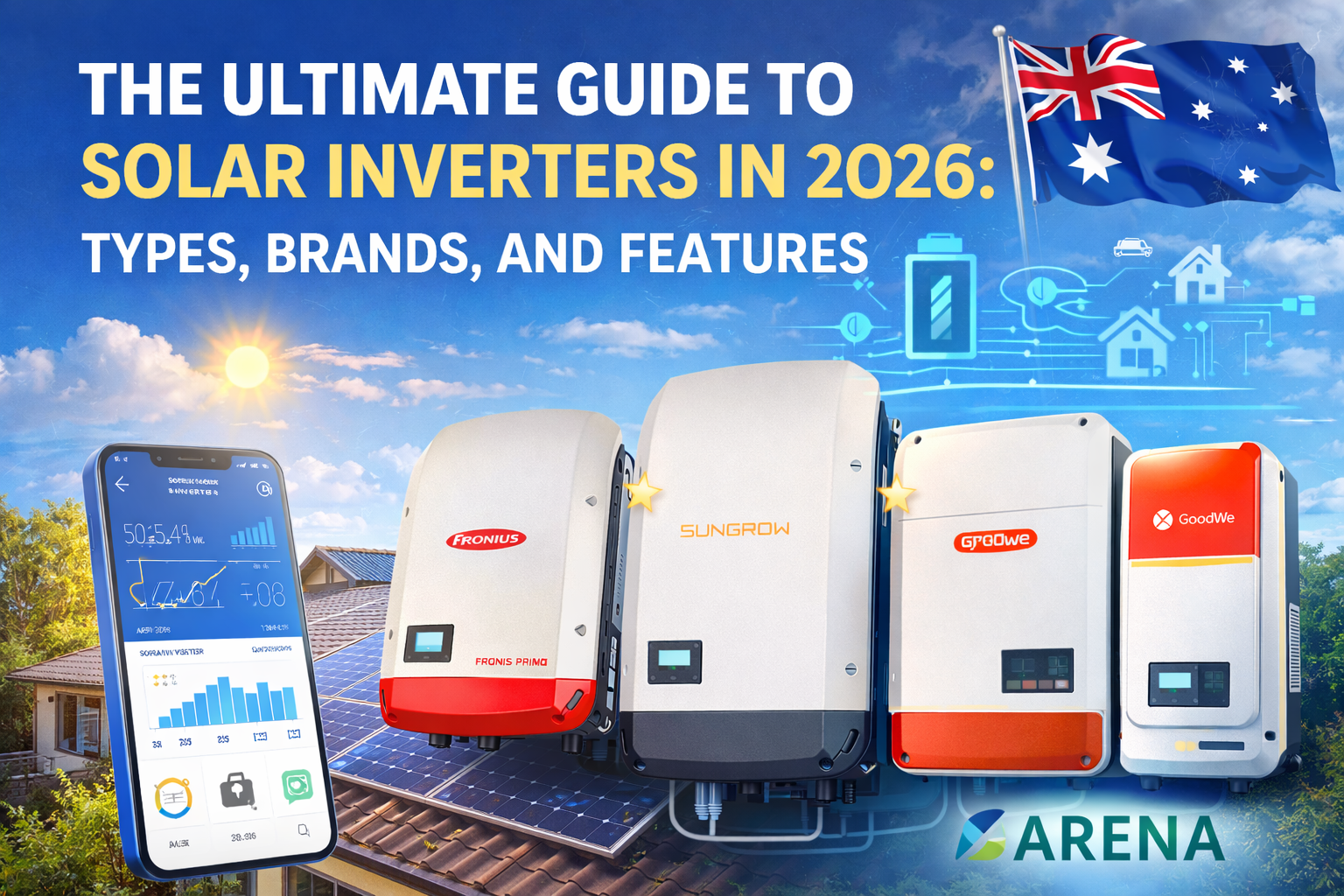
Why Solar Inverters Matter More Than Ever
In 2026, solar inverters are no longer just simple power converters. Instead, they have become the control centre of modern solar systems, managing efficiency, safety, grid interaction, batteries, and smart energy use.
Although many homeowners focus heavily on solar panels, the inverter ultimately determines how much usable electricity your system produces, how long it lasts, and how well it adapts to future upgrades. Therefore, choosing the right inverter is just as important as choosing the right panels.
This guide breaks down solar inverter types, leading brands, and must-have features, helping Australian homeowners make confident, future-ready decisions.
What Does a Solar Inverter Do?
At its core, a solar inverter converts the DC electricity produced by your solar panels into AC electricity that your home can use. However, modern inverters do far more than that.
In 2026, advanced inverters also:
- Optimise system efficiency
- Monitor performance in real time
- Manage batteries and EV chargers
- Support grid stability
- Enable smart energy control
Because of this expanded role, inverter quality has a direct impact on savings, reliability, and system lifespan.
Types of Solar Inverters in 2026
1. String Inverters
String inverters remain the most common inverter type in Australia. Panels are connected in “strings” to a single central inverter.
Best for:
- Homes with unshaded roofs
- Simple roof layouts
- Cost-effective installations
Pros:
- Lower upfront cost
- Proven reliability
- Easy maintenance
Cons:
- Shading on one panel affects the whole string
- Limited panel-level monitoring
2. Micro Inverters
Micro inverters are installed behind each panel, allowing every panel to operate independently.
Best for:
- Homes with partial shading
- Multiple roof orientations
- Homeowners wanting maximum performance tracking
Pros:
- Excellent performance in shaded conditions
- Panel-level monitoring
- No single point of failure
Cons:
- Higher upfront cost
- More components on the roof
3. Hybrid Inverters
Hybrid inverters manage both solar panels and batteries. As battery adoption grows, hybrid inverters are becoming increasingly popular.
Best for:
- Homes planning to add batteries
- Energy independence goals
- Future-proof solar systems
Pros:
- Battery-ready
- Smart energy management
- Supports backup power options
Cons:
- Higher initial cost than standard string inverters
4. Optimiser-Based Systems
Some systems combine a central inverter with panel optimisers. These improve performance while keeping costs lower than full micro-inverter systems.
Best for:
- Mixed shading conditions
- Homeowners wanting a balance of cost and optimisation
Why Australian Conditions Demand Better Inverters
Australia’s climate places extreme stress on solar inverters. High temperatures, dust, humidity, and voltage fluctuations can quickly expose weak designs.
According to the Australian Renewable Energy Agency (ARENA), future solar systems must be smarter, more resilient, and better integrated with the grid.
👉 https://arena.gov.au/
As a result, modern inverters are now built with:
- Higher temperature tolerance
- Improved cooling systems
- Advanced voltage control
- Smarter grid-support features
Leading Solar Inverter Brands in Australia (2026)
✔ Fronius
Known for premium build quality and excellent heat performance. Popular for reliability and long service life.
✔ Sungrow
Widely installed across Australia, offering strong performance and excellent value, especially for hybrid systems.
✔ SolarEdge
Combines optimisers with a central inverter for high efficiency and detailed monitoring.
✔ Enphase
Micro-inverter leader offering exceptional reliability and panel-level performance.
✔ GoodWe
Strong hybrid inverter range with competitive pricing and growing market trust.
Each brand serves a different need, which is why comparing quotes carefully is essential.
Key Inverter Features to Look for in 2026
When choosing an inverter, prioritise these features:
- High efficiency ratings (97–99%)
- Battery compatibility
- Smart monitoring apps
- CEC compliance
- Strong warranty (10–15 years)
- Local Australian support
- High temperature tolerance
Although cheaper inverters may look appealing, they often lack these long-term performance safeguards.
Inverters and Batteries: A Growing Pair
With batteries becoming more affordable, inverter choice now directly affects storage options. Hybrid and battery-ready inverters allow you to add storage later without costly replacements.
Therefore, even if you don’t want a battery today, choosing the right inverter now can save thousands in future upgrade costs.
How to Choose the Right Inverter for Your Home
The “best” inverter depends on your:
- Roof layout and shading
- Location and climate
- Energy usage patterns
- Budget
- Plans for batteries or EV charging
Because of these variables, expert advice is invaluable.
👉 Compare trusted solar inverter options from verified installers:
https://quotes.solarproof.com.au/request-solar-quotes/
This allows you to see real-world recommendations tailored to your home — not generic sales pitches.
Final Takeaway
In 2026, solar inverters are smarter, more powerful, and more important than ever. By understanding inverter types, choosing proven brands, and prioritising future-ready features, Australian homeowners can maximise savings and system reliability.
Instead of focusing only on panels or price, invest in the inverter that will quietly power your home efficiently for years to come.